GST E-Way Bill Rules for Transporters in 2026 — A Practical Guide
By FAST INDIA TRANSPORT Team · · — min read
In this article
The e-way bill has been part of Indian goods movement since 2018, and it is still the single most common reason a truck is stopped, detained or penalised. Most of those stoppages are not caused by tax evasion — they are caused by an expired bill, a blank Part-B or a vehicle number that was never updated after a breakdown. This is a practical guide for transporters, consignors and consignees who want their vehicles to keep moving in 2026.
Disclaimer: this article is general operational guidance, not tax or legal advice. Rules and state-level thresholds change. Confirm current requirements on the official GST e-way bill portal or with your tax advisor before acting.
What an e-way bill actually is
An e-way bill is an electronic document generated on the GST e-way bill portal for the movement of goods. It carries a unique 12-digit EBN (e-way bill number) and records who is sending the goods, who is receiving them, what the goods are, their value, and which vehicle is carrying them. It must accompany the consignment — in practice, as the EBN available to the driver along with the tax invoice and the Lorry Receipt.
It can be generated by the consignor, the consignee or the transporter. In everyday practice on our network, the shipper generates Part-A and we complete Part-B with the vehicle details before the vehicle leaves the gate.
Thresholds and common exemptions
The widely applied threshold is consignment value above ₹50,000 for inter-state movement. Intra-state thresholds are set by individual states and differ — some states apply a higher limit for movement within the state, and a few apply special rules for particular goods. Always check the rule for the specific state pair on your lane.
Situations where an e-way bill is generally not required include movement of exempted goods, transport by non-motorised conveyance, and certain movements from a port, airport or customs station to an inland container depot for clearance. Because these carve-outs are narrow and change, treat "no e-way bill needed" as something to verify, not assume.
Part-A and Part-B: where things go wrong
Part-A
Part-A carries the commercial detail: GSTIN of supplier and recipient, place of despatch and delivery, invoice or challan number and date, value of goods, HSN code and reason for transportation. This is normally filled by the consignor. An error here — a wrong GSTIN, a mismatched invoice value — is the kind of thing that turns a routine check into a long one.
Part-B
Part-B carries the transport detail: vehicle number, or the transport document number for rail, air or ship. An e-way bill without a valid Part-B is not a valid e-way bill for road movement. If the vehicle is changed mid-journey — breakdown, transhipment at a hub, a switch from a smaller feeder vehicle to a line-haul truck — Part-B must be updated before the goods move again.
This is exactly why part-load consignments need more discipline than full loads: a PTL consignment may sit on two or three different vehicles between origin and destination, and each leg needs the correct vehicle recorded. Our booking desk handles these updates as part of the service, on both FTL and PTL bookings.
Validity: distance decides the clock
Validity is calculated from the distance to be covered, and the clock starts when Part-B is first entered. The commonly applied basis is one day for the first 200 km for regular cargo, and one additional day for every further 200 km or part thereof. Over-dimensional cargo is treated on a shorter distance-per-day basis. A day here means a period ending at midnight of the following day, not a rolling 24 hours — which is why a bill generated late in the evening effectively loses time.
If the consignment cannot be delivered within validity because of a genuine exception — a breakdown, a natural calamity, a law-and-order delay — validity can be extended within the window allowed around expiry. Extending it after the fact is not possible, so the driver and the control desk have to notice the problem before the clock runs out. On our lanes the control desk tracks expiry alongside GPS position for this reason.
Transporter ID and consolidated e-way bills
A transporter who is not registered under GST can enrol on the portal and receive a 15-digit Transporter ID (TRANSIN), which lets the transporter be named on the bill and update Part-B. A transporter carrying multiple consignments in one vehicle can generate a consolidated e-way bill listing the individual EBNs — one document for the vehicle, with the individual bills still live underneath it.
For part-load operations this is routine: the vehicle carries a consolidated bill, and each shipper's consignment retains its own EBN, LR and invoice. If a consignment is offloaded at a hub, the consolidated bill for the onward vehicle is regenerated.
Penalties and detention
Moving goods without a valid e-way bill exposes the consignment to detention of the goods and the vehicle, and to penalty under the GST law — commonly applied as a substantial amount linked to the tax payable on the goods, with a higher exposure for exempted goods. Beyond the money, the real cost is time: a detained vehicle misses its delivery slot, the driver is stuck, and the return load is lost.
Minor clerical errors — a small spelling mistake, a one or two digit error in the PIN code, an error in a document number where other details are correct — have generally been treated leniently under departmental instructions. Do not rely on that. Check before despatch.
Ten habits that keep vehicles moving
- Generate before loading, not after. A bill created at the gate is a bill created in a hurry.
- Match invoice, LR and e-way bill exactly — value, description, GSTIN, quantity.
- Fill Part-B every time, including for short first legs from factory to hub.
- Update Part-B on every vehicle change, no exceptions, including breakdown swaps.
- Watch the expiry clock against actual distance and route restrictions, not the map's best case.
- Brief the driver on what to show and whom to call if the vehicle is stopped.
- Keep digital copies of invoice, LR, e-way bill and POD against the same booking reference.
- Use the right HSN detail so the description cannot be read as a mismatch.
- Check state-specific intra-state thresholds before assuming the ₹50,000 rule applies.
- Reconcile monthly — bills generated versus invoices raised versus PODs received.
We generate and manage e-way bills, digital LRs and PODs as a standard part of every booking, and our documentation desk reconciles them monthly for key accounts. If your last quarter involved a detained vehicle or a penalty notice, that is usually a process problem rather than a compliance philosophy problem — and it is fixable. Send us your lane details through the quote form, or read our comparison of FTL versus PTL transportation to decide how the consignment should move in the first place.
Related articles
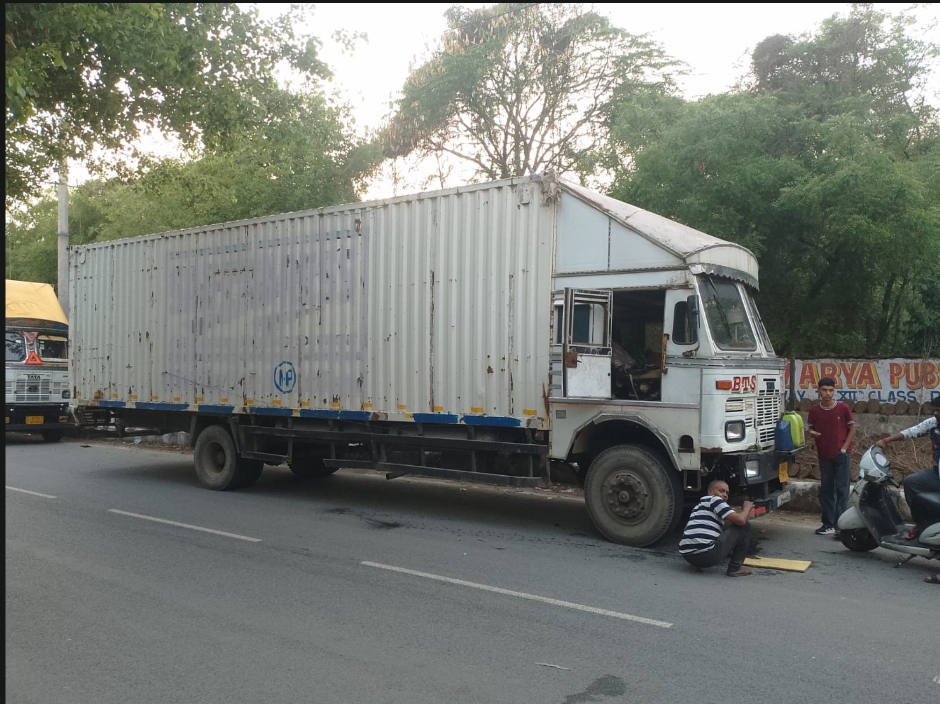 TransportationFTL vs PTL Transportation in India: Which is Right for Your Business? (2026 Guide)When a full truck actually costs less than a part load — with real Indian lane numbers.
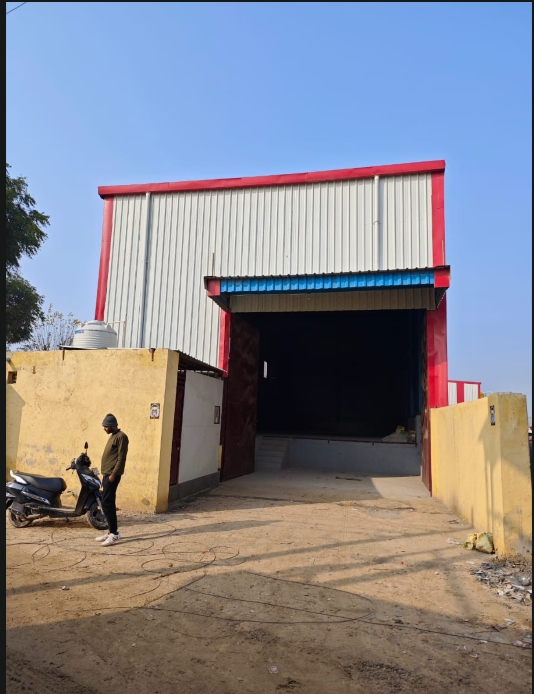 WarehousingChoosing the Right Warehousing Partner in Mumbai, Delhi & JaipurHow to pick between Bhiwandi, Mundka and Jhotwara for your forward stocking point.
Next step
Get a fixed rate for your next consignment.
Share pickup and delivery city and we will respond within 30 minutes on business hours.
Note: blog articles are published in English only. For guidance in Hindi, call us on +91-9284049919 — our team will explain everything in Hindi on the phone.