FTL vs PTL Transportation in India: Which is Right for Your Business? (2026 Guide)
By FAST INDIA TRANSPORT Team · · — min read
In this article
Every Indian shipper eventually asks the same question at the same moment: the despatch is ready, the buyer wants it on a date, and the choice is between booking a whole truck or sending the consignment as part load with other cargo. Choose wrong and you either pay for empty space or explain a late delivery. This guide sets out how we advise clients at FAST INDIA TRANSPORT after ten years of moving both, across the Mumbai–Delhi, Mumbai–Jaipur, Gujarat–NCR and South India corridors.
What is FTL (Full Truck Load)?
Full Truck Load means one vehicle carries your consignment and nothing else. You book the capacity — a 14 ft Eicher, a 32 ft trailer, a 20 ft container — and it runs point to point from your loading dock to the consignee's gate. There is no hub, no unloading at a transhipment yard, no waiting for the vehicle to fill up with somebody else's boxes.
In practice FTL is the default when any one of these is true: the load fills more than roughly 60 percent of a vehicle, the goods are fragile or high value, the delivery date is firm, or the cargo is something that should not sit beside anything else — pharmaceutical cartons, food-grade packaging, sensitive electronics.
Typical FTL vehicles in India
- LCV (Tata Ace, 407): 750 kg to 3 tonnes — city runs and short-haul.
- MCV (Eicher 709, 1109, 1611): 4 to 9 tonnes — regional and intercity movement.
- HCV (14T, 16T, 20T, 25T): long-haul interstate full loads.
- 32 ft trailer / SXL: up to 32 tonnes for bulk, project and volumetric cargo.
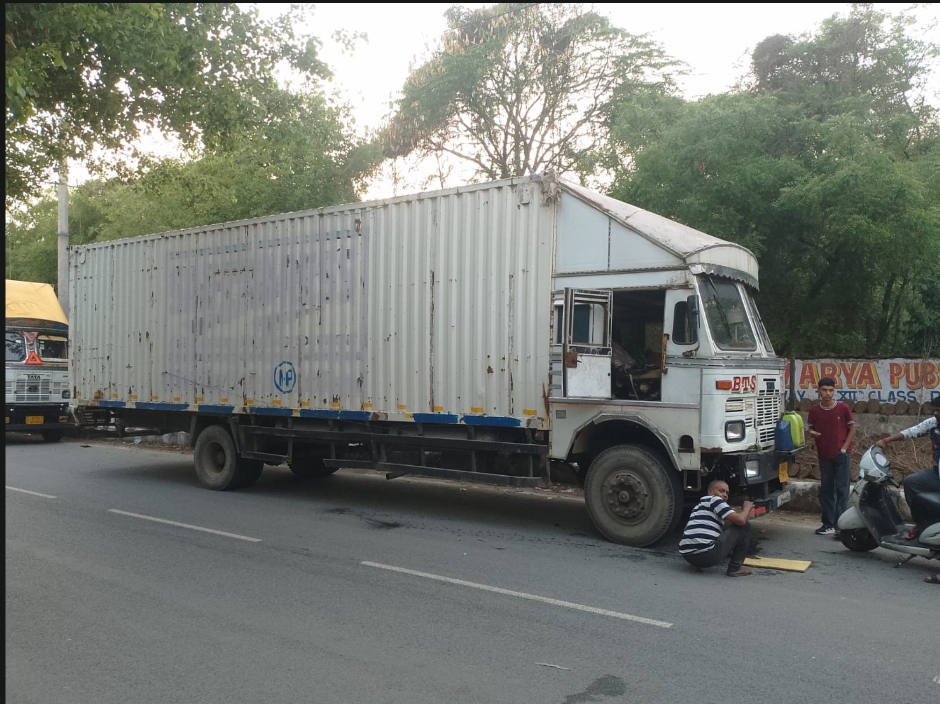
- 20 ft / 40 ft containers: port movement at JNPT and Mundra and closed-body long-haul.
Our complete vehicle and tonnage chart is on the fleet page.
What is PTL (Part Load / LTL)?
Part Load — also called LTL, Less Than Truck Load — means your consignment shares a vehicle with cargo from other shippers. You pay for the weight and space you occupy, not for the whole truck. The freight is collected at a branch or picked up from your premises, consolidated with other cargo heading the same way, and moved on a scheduled departure.
PTL is the right answer for regular small despatches: a dealer replenishment of 40 cartons, three pallets of spares, a few bales of fabric. On our network, part-load departures run daily between Bhiwandi, Delhi NCR, Jaipur and the Gujarat belt, which means a small consignment does not wait days for a vehicle to fill.
Cost: where the money actually goes
The instinct is that PTL is always cheaper. That is true only up to a break-even point. FTL is priced per trip; PTL is priced per kilogram or per cubic foot, whichever is higher — which is why light but bulky cargo like foam, empty packaging or textile rolls often costs more on PTL than shippers expect.
| Factor | FTL | PTL |
|---|---|---|
| Pricing basis | Per vehicle, per trip | Per kg or per cft, whichever higher |
| Best for | Above roughly 60% vehicle fill | Small, regular consignments |
| Handling touchpoints | Two (load, unload) | Four or more (pickup, hub, sort, delivery) |
| Transit time | Fastest — direct run | Slower — consolidation and hub time |
| Damage exposure | Lower | Higher — more handling |
| Minimum charge | Full vehicle | Minimum chargeable weight applies |
A practical rule from our booking desk: once a consignment crosses about 3.5 to 4 tonnes on a long-haul lane, ask for both rates. Very often the FTL price on a 14 ft vehicle lands close to the PTL price — and you gain a direct run with no transhipment.
Transit time and risk
FTL moves as fast as the road allows. PTL adds consolidation time at origin, sorting at the hub and de-consolidation at destination. On the Mumbai–Delhi corridor that difference is typically one to two days. For a monthly stock transfer nobody notices. For a production-line component or a retail promotion date, it matters.
Risk follows handling. Every additional touch is an additional chance of a torn carton or a misrouted package. If your packing is marginal — thin cartons, no palletisation, no corner protection — PTL will expose it. Either upgrade the packing or move to FTL.
Documentation: the part that gets people fined
Both FTL and PTL need the same statutory paperwork in India: a tax invoice, a Lorry Receipt (LR) from the transporter and, above the state threshold, an e-way bill under GST. The difference is administrative volume. On PTL, each consignment carries its own LR and e-way bill, and the vehicle may carry a consolidated e-way bill covering many consignments. On FTL, it is one LR and usually one e-way bill.
Where shippers get into trouble is Part-B of the e-way bill and validity. If the vehicle changes, Part-B has to be updated. If the e-way bill expires in transit, the consignment is exposed to detention and penalty. We cover the rules in detail in our GST e-way bill guide for 2026.
Decision checklist
Run your consignment through these six questions:
- How full is the vehicle? Above 60 percent fill, get an FTL quote.
- Is the delivery date firm? Firm date and long distance favour FTL.
- How fragile or valuable is the cargo? High value or fragile favours FTL, plus goods-in-transit insurance.
- Is the cargo light but bulky? Check the volumetric rate before assuming PTL is cheaper.
- How many delivery points? Multiple drops on one route may still suit FTL as a milk run.
- How often do you ship this lane? Weekly or more may justify a contracted vehicle at a fixed monthly rate.
Five costly mistakes we see every month
- Declaring weight but not dimensions. PTL is charged on volumetric weight too. Give both, or the rate will change at loading.
- Booking the smallest vehicle to save money. An overloaded vehicle risks penalty, detention and damage. The saving disappears.
- Ignoring loading and unloading facility. No forklift at destination changes the vehicle choice and the time on site.
- Leaving the e-way bill to the driver. Generate it before despatch, with correct Part-B, and keep the validity aligned to the distance.
- Using PTL for anything unpackaged. Loose, unpalletised goods in a shared vehicle is how damage claims start.
What about a hybrid: contracted vehicles
There is a third option that most shippers never ask for. If you send four or more consignments a month on the same lane, a dedicated or contracted vehicle placed at a fixed monthly rate often beats both spot FTL and PTL. You get guaranteed capacity during festival season and month-end despatch spikes, a driver who knows your gate and your consignee, and a predictable freight line in your budget instead of a rate that moves with diesel and demand. On the Bhiwandi–Mundka and Bhiwandi–Jaipur lanes several of our corporate accounts run exactly this arrangement, with a milk-run route covering two or three drops on the same trip. Ask for a monthly contract quote alongside your spot rates and compare the annualised number, not the per-trip one.
Quick answers
Is PTL always cheaper than FTL?
No. Below roughly 3 to 4 tonnes on a long lane, PTL usually wins. Above that, get both quotes — FTL frequently matches or beats PTL once volumetric weight is applied.
Can I track a part load?
Yes. Every booked shipment on our network — FTL or PTL — can be tracked, and our control desk shares status updates proactively.
What if I need storage between legs?
We hold stock at any of our six branch warehouses and despatch when you say. See warehousing and storage.
How fast can you confirm a rate?
Within 30 minutes on business hours. Send the details through the quote form or WhatsApp them to +91-9284049919.
Still unsure? Tell us the lane, the weight and the date, and we will tell you honestly which mode is cheaper — including when that answer is the one that earns us less.
Related articles
 ComplianceGST E-Way Bill Rules for Transporters in 2026 — A Practical GuideThresholds, validity, part-B rules and the mistakes that get consignments detained.
 WarehousingChoosing the Right Warehousing Partner in Mumbai, Delhi & JaipurHow to pick between Bhiwandi, Mundka and Jhotwara for your forward stocking point.
Next step
Get a fixed rate for your next consignment.
Share pickup and delivery city and we will respond within 30 minutes on business hours.
Note: blog articles are published in English only. For guidance in Hindi, call us on +91-9284049919 — our team will explain everything in Hindi on the phone.